
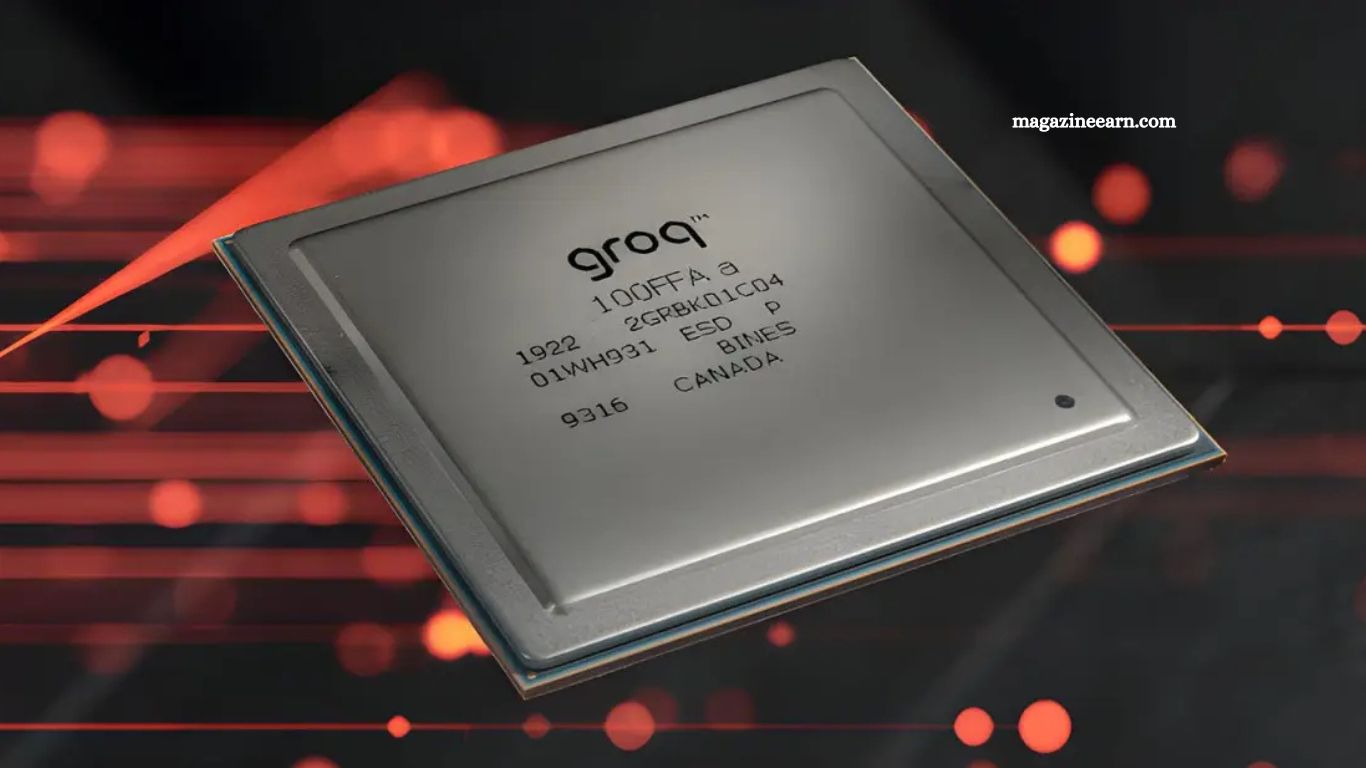
NVIDIA has taken a significant step in the rapidly evolving Chip AI industry by licensing technology from competitor Groq and bringing key executives into its fold. The agreement, described as non-exclusive, allows Nvidia to access Groq’s innovative Language Processing Unit (LPU) technology, designed to run large language models (LLMs) up to ten times faster while consuming a fraction of the energy of conventional GPUs.
As part of the deal, Nvidia will also hire Groq’s founder and CEO, Jonathan Ross, president Sunny Madra, and several other employees, tapping into a team with proven expertise in AI chip development. This strategic move strengthens Nvidia’s dominance in AI hardware and positions the company to accelerate the performance and efficiency of AI applications worldwide.
Read More: Google Introduces Long-Awaited Gmail Address Change Feature
Clarifying the Deal
While CNBC reported that Nvidia is acquiring assets from Groq for $20 billion, Nvidia clarified to TechCrunch that this arrangement does not constitute a company acquisition. The company declined to comment on the full scope of the deal.
If the reported figures are accurate, this transaction would represent Nvidia’s largest-ever purchase. With Groq’s technology and talent on board, Nvidia is poised to further solidify its leadership in AI chip manufacturing.
The Technology Behind the Move
The race to develop advanced AI capabilities is intensifying across the tech sector. NVIDIA’s GPUs have emerged as the industry standard for AI workloads. However, Groq has been developing a different approach: the LPU (Language Processing Unit), a chip designed to run large language models (LLMs) up to ten times faster while consuming only a tenth of the energy.
Groq’s CEO, Jonathan Ross, is well-known for this type of innovation. During his tenure at Google, Ross played a key role in inventing the TPU (Tensor Processing Unit), a custom AI accelerator chip that helped accelerate AI research and applications.
Groq’s Rapid Growth
Groq has experienced remarkable growth in recent years. In September, the company raised $750 million at a $6.9 billion valuation. Its technology now supports the AI applications of over 2 million developers, up from approximately 356,000 the previous year.
This partnership reflects Nvidia’s strategy to expand its AI capabilities while integrating cutting-edge chip technologies and experienced talent, positioning the company for continued leadership in the rapidly evolving AI market.
Frequently Asked Questions
What is Groq known for?
Groq specializes in developing LPUs (Language Processing Units), a type of chip designed to run large language models (LLMs) up to ten times faster and using one-tenth the energy compared to traditional GPUs. The company has grown rapidly, supporting AI applications for over 2 million developers.
Who is Jonathan Ross, and why is he significant?
Jonathan Ross is Groq’s founder and CEO. He previously worked at Google, where he helped invent the TPU (Tensor Processing Unit), a widely used AI accelerator. He is recognized for pushing the boundaries of AI chip technology.
How does this deal affect Nvidia’s position in AI?
By licensing Groq’s technology and bringing in its leadership team, Nvidia strengthens its dominance in AI chip manufacturing. The partnership provides Nvidia access to advanced LPU technology, complementing its existing GPU offerings and accelerating AI capabilities across industries.
Is Nvidia acquiring Groq entirely?
No. Nvidia has emphasized that this deal is not a full acquisition of Groq. It involves licensing technology and hiring personnel, but the company itself remains independent.
How much has Groq raised and what is its valuation?
In September, Groq raised $750 million at a $6.9 billion valuation. The company has grown quickly, expanding its developer base from about 356,000 last year to over 2 million today.
Why is this deal significant for the AI industry?
The partnership highlights the increasing competition for AI computing power. With Groq’s efficient LPU technology and Nvidia’s established GPU ecosystem, this collaboration could accelerate AI development and influence the direction of AI hardware standards.
Conclusion
Nvidia’s licensing deal with Groq and the integration of its leadership team underscores the company’s commitment to maintaining its leadership in AI hardware. By combining Nvidia’s established GPU ecosystem with Groq’s innovative LPU technology, the partnership positions both companies to accelerate the development of faster, more energy-efficient AI solutions.
