
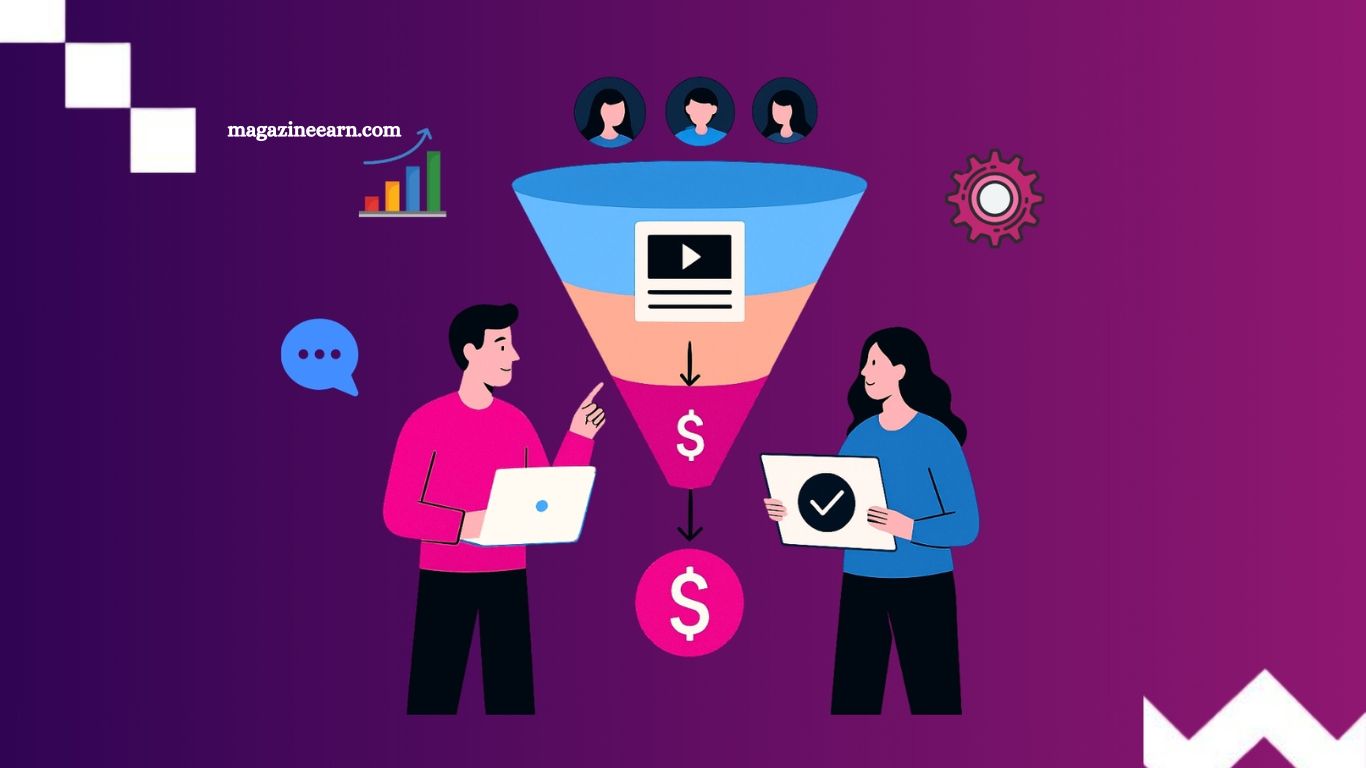
A high-converting marketing funnel turns strangers into leads, leads into buyers, and buyers into loyal customers. It creates a structured path that guides users through awareness, interest, decision, and action with precision.
Businesses that master funnel design consistently increase revenue, lower acquisition cost, and improve customer lifetime value. This guide explains how to build a high-converting marketing funnel using clear, practical steps focused on performance and conversion.
Read More: Digital Marketing Trends Every Marketer Must Know
What Is a Marketing Funnel
A marketing funnel is a step-by-step system that maps the customer journey from first interaction to final purchase. It removes guesswork from marketing and replaces it with structured progression.
Core funnel stages include:
- Awareness: User discovers your brand
- Interest: User engages with content
- Consideration: User evaluates the solution
- Conversion: User makes a purchase
- Retention: User returns or upgrades
A high-converting funnel optimizes each stage to reduce drop-offs and increase action rates.
Define Target Audience with Precision
Strong funnels start with clarity on audience behavior and needs. Generic targeting reduces conversion rates.
Focus on:
- Demographics: age, location, income level
- Psychographics: goals, pain points, motivations
- Behavioral data: search intent, buying patterns
- Problem awareness level
Create one primary customer persona. Build messaging around that persona only. Narrow focus increases conversion efficiency.
Build a Strong Value Proposition
A value proposition communicates why a user should choose your offer over alternatives.
Effective structure:
- Clear problem statement
- Direct solution explanation
- Measurable benefit
- Competitive differentiation
Example: instead of “marketing software,” use “automated funnel system that increases lead conversion by 40% within 30 days.”Clarity drives action. Confusion reduces conversions.
Design Funnel Stages Strategically
Each funnel stage must guide the user forward without friction.
Awareness Stage
Goal: attract traffic
Use:
- SEO content
- Paid ads
- Social media posts
- Video content
Focus on education, not selling.
Interest Stage
Goal: build engagement
Use:
- Blog content
- Email newsletters
- Lead magnets
- Webinars
Provide value that solves micro problems.
Consideration Stage
Goal: build trust
Use:
- Case studies
- Testimonials
- Product comparisons
- Email sequences
Remove doubts and objections.
Conversion Stage
Goal: drive purchase
Use:
- Landing pages
- Strong call-to-action
- Limited-time offers
- Simplified checkout process
Reduce friction at every step.
Create High-Converting Landing Pages
Landing pages act as conversion hubs. Every element must support one goal: action.
Key elements:
- Attention-grabbing headline
- Benefit-focused subheadline
- Clear call-to-action button
- Visual proof (results, stats, testimonials)
- Minimal distractions
Avoid unnecessary links or clutter. Focus user attention on the conversion path only.
Use Lead Magnets for Audience Capture
Lead magnets convert traffic into leads. They must offer immediate value.
Effective lead magnets include:
- Free guides
- Checklists
- Templates
- Mini courses
- Free trials
The stronger the perceived value, the higher the opt-in rate.
Automate Email Nurture Sequences
Email automation builds trust and moves leads through the funnel.
Structure:
- Email 1: deliver lead magnet
- Email 2: educate on the problem
- Email 3: present solution
- Email 4: handle objections
- Email 5: offer conversion CTA
Keep messaging focused, direct, and benefit-driven.
Optimize Conversion Rate Continuously
A funnel is never finished. Optimization improves performance over time.
Key optimization methods:
- A/B testing headlines and CTAs
- Analyzing drop-off points
- Improving page load speed
- Refining audience targeting
- Enhancing ad messaging
Small improvements compound into significant revenue growth.
Retain and Upsell Customers
High-converting funnels do not stop at purchase. Retention increases lifetime value.
Strategies:
- Loyalty programs
- Personalized offers
- Upsell and cross-sell campaigns
- Post-purchase email sequences
- Exclusive content access
Retained customers cost less than new acquisitions and generate higherprofits
Common Mistakes to Avoid
- Targetia too-broad audience
- Weak or unclear messaging
- Overcomplicated funnel structure
- Ignoring mobile optimization
- Lack of tracking and analytics
Fixing these issues improves conversion rate significantly.
Frequently Asked Questions
What is a marketing funnel?
A marketing funnel is a step-by-step process that guides potential customers from awareness to purchase.
Why is a marketing funnel important?
It helps increase conversions by guiding users through a structured buying journey.
What are the main stages of a funnel?
Awareness, interest, consideration, conversion, and retention.
What is a lead magnet?
A free resource offered to collect user information like email addresses.
How can I improve funnel conversions?
Optimize landing pages, improve messaging, and test different CTAs.
Do marketing funnels work for all businesses?
Yes, any business with a customer journey can benefit from a funnel.
Conclusion
A high-converting marketing funnel is essential for turning traffic into consistent revenue. When each stage is clearly structured—awareness, interest, consideration, conversion, and retention—it becomes easier to guide users toward action. Success depends on understanding the audience, delivering strong value, and continuously optimizing performance.
