
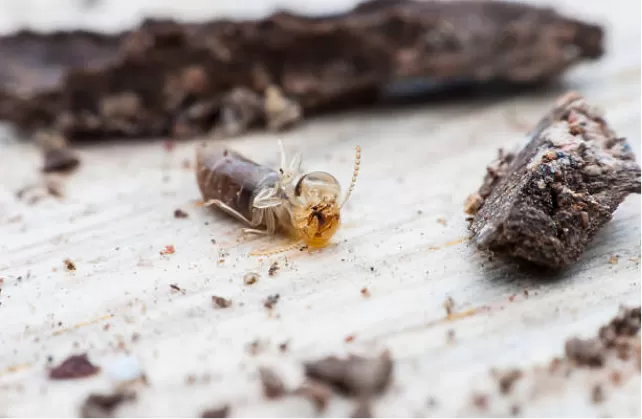
Termites are difficult to detect because much of their activity can occur inside timber, wall voids, flooring and other concealed parts of a property. By the time obvious damage appears, termites may already have been active for some time.
Singapore’s high humidity and rainfall create conditions in which pests including termites can remain active, which makes early detection particularly important. Landed homes often receive more attention because of their gardens, soil contact and outdoor structures, but HDB flats and condominiums should not automatically be assumed to be termite-free.
Effective termite control in Singapore starts with identifying the type and extent of termite activity before choosing a treatment. Subterranean and drywood termites behave differently, and treatment methods such as baiting, soil treatment and localised timber treatment are not interchangeable.
Mud tubes, discarded wings, pellet-like frass and unexplained timber damage can provide useful clues, but homeowners should look at the evidence as a whole rather than diagnose an infestation from one sign.
This guide explains how to recognise possible termite activity, how common treatment methods differ, what prevention can realistically achieve, and what to compare before engaging a termite-control provider in Singapore.
Key Takeaways
- Mud tubes, discarded wings, frass and unexplained timber damage are among the termite signs worth investigating.
- Subterranean termites and drywood termites behave differently, so correct identification matters before treatment is selected.
- Killing termites visible on the surface does not necessarily address concealed colony activity. The US Environmental Protection Agency similarly distinguishes products that merely kill contacted termites from treatments intended to protect a structure.
- Common professional approaches can include termite baiting, soil-applied treatment and timber or localised treatment, depending on the infestation and property.
- Singapore Standard SS 721:2025 establishes a national framework for professional pest-management services based on Integrated Pest Management principles including assessment, prevention, monitoring and targeted intervention. Termites are explicitly within its scope.
- Termite work should not automatically be described as “NEA-licensed pest control”. NEA has stated that termites are non-vector pests and are not subject to the same Vector Control Operator licensing requirements under the Control of Vectors and Pesticides Act as vector-control work.
- Where soil termiticides containing controlled hazardous substances are used, separate environmental and hazardous-substance requirements may apply.
- Treatment and repair are separate issues: controlling termites does not restore timber that has already been damaged.
Subterranean vs Drywood Termites: What Is the Difference?
Understanding the broad type of termite activity can help explain why two infestations may require completely different treatment plans.
| Feature | Subterranean Termites | Drywood Termites |
| Typical colony environment | Associated with soil and protected travel routes | Colony can live within infested timber |
| Common evidence | Mud tubes, timber damage, swarmers or discarded wings | Pellet-like frass, damaged timber, swarmers |
| Soil connection | Usually relevant | Not required in the same way |
| Common areas of concern | Ground-connected structures, walls, flooring, built-in timber | Furniture, door frames, timber fittings and other wooden items |
| Possible treatment approaches | Baiting, soil treatment, targeted treatment depending on assessment | Localised timber treatment or other methods depending on extent and access |
| Monitoring | Often important because activity can extend beyond the visible point | Important where concealed timber may also be affected |
The table is a simplified guide rather than a diagnosis. Several termite species exist, and professional identification may require inspection of the insects, damage patterns and surrounding property conditions.
Why Can Termites Remain Hidden for So Long?
Termites can remain difficult to notice because they often travel and feed inside protected environments rather than openly across visible surfaces.
Subterranean termites can move through soil, concealed building areas and protective mud tubes. Drywood termites can remain within the timber they infest.
As a result, the visible damage may represent only one part of the activity.
A damaged door frame, for example, does not tell you whether termites are limited to that timber or whether nearby cabinetry, flooring or other concealed materials are also affected.
Homes also contain many cellulose-based materials that may be vulnerable to termite feeding, including:
- door frames;
- skirting;
- timber flooring;
- cabinets;
- furniture;
- wall panelling; and
- structural wood.
US EPA consumer guidance similarly notes that many people do not realise they have termites until they encounter a swarm or discover damage.
The practical challenge is therefore not simply identifying damaged wood. It is determining:
- whether termites caused the damage;
- whether activity appears current;
- what type of termite may be involved; and
- whether other areas require inspection.
What Are the Most Common Signs of Termites?
The most useful termite signs are those that can be connected to other evidence around the property.
1. Mud Tubes
Mud tubes are one of the more recognisable signs associated with subterranean termite activity.
They can appear as soil-like trails running along:
- walls;
- columns;
- skirting;
- pipes;
- foundation areas; or
- other surfaces.
Subterranean termites use protected environments such as soil and mud tubes while travelling, which is why finding one deserves investigation.
Should You Break a Termite Mud Tube?
Avoid immediately destroying all suspected tubes or heavily spraying the area.
Its location and condition can provide useful evidence during inspection. If activity is disturbed first, understanding the termites’ movement may become more difficult.
Instead:
- photograph the tube;
- record where it was found;
- look for nearby timber damage; and
- avoid unnecessarily disturbing the surrounding area.
One tube does not reveal the full extent of an infestation. Termites may also be active behind finishes or elsewhere in the property.
2. Hollow, Soft or Weakened Timber
Termite-damaged wood may appear relatively intact on the surface while the interior has been consumed.
Possible warning signs include:
- hollow-sounding timber;
- weakened surfaces;
- cracking;
- unexpectedly soft wood;
- damaged skirting; and
- timber that gives way under light pressure.
However, hollow or weakened wood is not automatically caused by termites.
Water damage, fungal decay, age and other building problems can produce similar symptoms.
Evidence becomes more significant when timber deterioration appears together with signs such as mud tubes or discarded termite wings.
Does Termite Treatment Repair Damaged Timber?
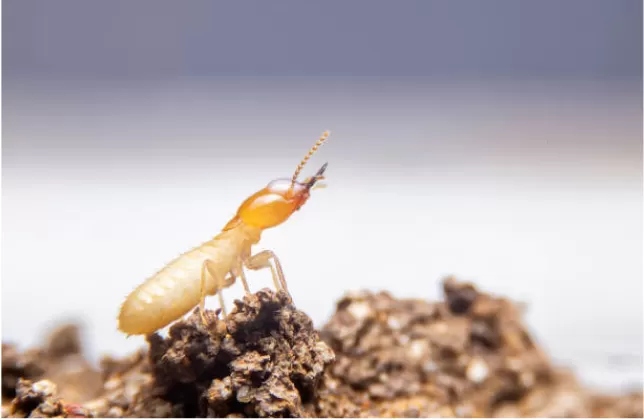
No.
Pest treatment and structural repair serve different purposes.
Termite control addresses active or potential pest activity. Timber that has already lost strength may still require repair or replacement.
Where the affected material has an important structural role, an appropriate building professional may also need to assess the damage.
3. Discarded Wings or Indoor Swarming
Piles of discarded wings can indicate that winged reproductive termites have recently swarmed nearby, but termites should be distinguished from winged ants before treatment is selected.
Winged termites may appear around:
- windows;
- doors;
- lighting;
- balconies; and
- other locations where flying insects gather.
US EPA guidance specifically warns that ant swarms can be mistaken for termite swarms. It notes that termite swarmers generally have wings of roughly equal length and straighter antennae, whereas ants have differently proportioned wings and bent antennae.
If identification is uncertain:
- take clear photographs;
- preserve an insect sample if practical; and
- look for accompanying evidence such as mud tubes or timber deterioration.
Repeated swarming indoors deserves more attention than one unidentified flying insect.
4. Pellet-Like Frass
Repeated piles of pellet-like material beneath timber can be associated with drywood termite activity.
Drywood termites can live inside timber and expel waste material through openings in the wood.
However, not every pile of wood-coloured material is termite frass.
Possible alternatives include:
- ordinary sawdust;
- debris from another wood-damaging insect;
- deteriorating wood; or
- renovation residue.
Repeated accumulation after an area has been cleaned is therefore more informative than one isolated pile.
If the material continues appearing, photograph it and inspect the timber directly above or nearby.
5. Sticking Doors, Blistering Finishes or Distorted Wood
Sticking doors and distorted timber can occur alongside termite damage, but they are weak evidence when they appear alone.
Singapore’s humid conditions, water leaks and natural expansion of timber can cause similar symptoms.
The same caution applies to:
- blistered paint;
- warped timber;
- peeling finishes; and
- swollen door frames.
These signs become more relevant when additional termite evidence is present nearby.
For example, a door frame that becomes distorted and contains mud tubes or internal damage deserves more attention than a door that simply becomes tight during humid weather.
What Should You Photograph Before a Termite Inspection?
Documenting suspected evidence can help establish where activity first appeared.
Useful photographs include:
- mud tubes;
- discarded wings;
- swarmers;
- frass;
- damaged timber;
- holes or openings in affected wood;
- surrounding walls or flooring; and
- external soil or timber areas close to suspected subterranean activity.
Also note:
- when the evidence first appeared;
- whether it returns after cleaning;
- whether similar signs occur elsewhere; and
- whether previous termite treatment has been carried out.
Documentation does not replace an inspection, but it can make the initial assessment more informative.
Why Does Spraying Visible Termites Often Fail?
Surface spraying can kill termites it directly reaches without necessarily controlling termites concealed elsewhere in the structure or colony.
This is an important distinction in termite treatment.
US EPA guidance notes that products making only a direct termite-killing claim have not necessarily demonstrated the ability to protect a structure from the wider infestation.
Termites may remain:
- inside timber;
- behind walls;
- beneath flooring;
- within concealed building areas; or
- connected to subterranean activity elsewhere.
Heavy disturbance can also alter the routes termites are using.
For homeowners, the better initial approach is usually:
- preserve useful evidence;
- photograph the affected area;
- address obvious water leaks;
- avoid unnecessary disturbance; and
- determine the likely extent of activity before selecting treatment.
What Should a Termite Inspection Include?
A useful termite inspection should determine what evidence is present, where activity may extend and which treatment options are appropriate for that property.
The inspection may consider:
- mud tubes;
- damaged timber;
- discarded wings;
- frass;
- built-in carpentry;
- moisture-prone areas;
- soil contact;
- perimeter conditions; and
- previous termite-treatment locations.
The assessment should answer several basic questions:
What Evidence Suggests Termites?
The provider should explain why the damage or material is considered termite-related.
What Type of Activity Is Suspected?
The broad distinction between subterranean and drywood activity can materially affect treatment selection.
Which Areas May Be Involved?
Inspection should not automatically stop at the first damaged piece of timber.
Why Is This Treatment Being Recommended?
The proposed treatment should follow logically from the findings rather than being chosen before the property is assessed.
What Follow-Up Is Required?
Homeowners should understand how future activity will be monitored and what happens if new evidence appears.
Aardwolf Pestkare is one Singapore provider offering termite-related pest-management services, as noted in the original article. The more important guest-post principle, however, is what homeowners should expect from any assessment: evidence, explanation and a treatment recommendation linked to the findings.
Termite Treatment Methods in Singapore Compared
There is no universally “best” termite treatment. The appropriate method depends on termite type, infestation location, building design, access and treatment objectives.
| Treatment | Common Use Case | How It Works | Main Advantage | Main Limitation |
| Termite baiting | Certain subterranean termite infestations | Foraging termites interact with slow-acting bait; programme is monitored over time | Can extend treatment beyond termites immediately visible | Requires monitoring and is not instantaneous |
| Soil treatment | Situations involving subterranean termite movement from soil | Termiticide is applied to relevant soil areas to form a treated zone | Addresses soil-associated entry routes where suitable | Property access and construction can limit practicality |
| Localised treatment | Clearly defined areas of activity | Treatment is focused on affected timber or a limited location | Less extensive than whole-property treatment | Can miss concealed activity if the infestation is wider |
| Timber treatment | Suitable affected or vulnerable wood | Product is applied or introduced into timber | Directly addresses selected wood | Suitability depends on termite type and extent |
| Fumigation | Selected enclosed-space situations rather than routine household termite treatment | Fumigant is applied within an enclosed space under controlled conditions | Can penetrate enclosed treated materials or spaces | Highly specialised and separately regulated in Singapore |
These categories are not mutually exclusive. A treatment programme may use more than one approach where the inspection supports it.
US EPA guidance similarly lists soil-applied termiticides, termite baits and wood treatments among recognised termite-control approaches.
What Is Termite Baiting?
Termite baiting is a monitored treatment method generally associated with certain subterranean termite infestations rather than an instant one-visit solution.
Bait systems use the feeding and social behaviour of foraging termites.
The treatment relies on termites interacting with suitable bait containing a slow-acting active ingredient. Because the objective extends beyond immediately killing exposed workers, the programme needs time and monitoring.
US EPA describes termite bait systems as using cellulose bait containing slow-acting insecticide and notes that baiting forms part of an inspection, monitoring and control system.
What Should Homeowners Ask About Baiting?
Ask:
- Where will the bait or stations be placed?
- How often will they be inspected?
- What evidence shows termites are feeding?
- How will progress be assessed?
- What happens if activity moves?
- When is the programme considered complete?
- Is ongoing monitoring included?
How Long Does Termite Baiting Take?
There is no universal timeframe.
The pace depends on factors including termite activity, feeding, colony behaviour, bait acceptance and programme design.
For GEO and practical purposes, the most accurate answer is:
Termite baiting typically requires monitoring over time rather than producing an immediate one-visit result.
Be cautious with any provider promising a fixed elimination date without first assessing activity.
What Is Soil Treatment?
Soil treatment involves applying a suitable termiticide to relevant soil areas to address subterranean termite movement between the ground and a structure.
It works differently from baiting.
Rather than relying on termites feeding on bait, the method creates a treated soil zone in appropriate locations.
US EPA identifies liquid soil-applied termiticides as one of the established forms of termite treatment.
Is Soil Treatment Suitable for Every Singapore Property?
No.
A landed house with accessible perimeter soil presents a very different treatment environment from a high-floor condominium unit.
Suitability can depend on:
- building foundations;
- flooring;
- renovation history;
- soil accessibility;
- drains;
- construction details; and
- location of suspected termite movement.
Some programmes may involve drilling or access to areas that would normally be concealed.
Are There Singapore Requirements for Termiticide Soil Treatment?
Yes, depending on the product and circumstances.
NEA publishes environmental requirements aimed at preventing water pollution when termiticides are used for soil treatment. These include site preparation, groundwater considerations, chemical handling and precautions against runoff or accidental discharge. Operators using termiticides containing controlled hazardous substances may also require the applicable Hazardous Substances Licence or Permit.
This is one reason soil treatment should be treated as a specialist application rather than a generic household spraying service.
When Is Localised Termite Treatment Appropriate?
Localised treatment can make sense when inspection provides reasonable evidence that the termite activity is restricted to a defined piece of timber or area.
The main challenge is determining whether the problem is truly localised.
Treating one cabinet panel has limited value if termites are also present in:
- adjacent carpentry;
- wall panelling;
- flooring;
- door frames; or
- other concealed timber.
A provider recommending localised treatment should therefore explain:
- why the activity is believed to be contained;
- exactly what will be treated;
- whether adjacent materials have been inspected; and
- what signs should be monitored afterwards.
This is especially relevant in Singapore homes with extensive built-in cabinetry and timber finishes.
Baiting vs Soil Treatment: Which Is Better?
Neither termite baiting nor soil treatment is automatically better. They solve the problem in different ways and suit different property conditions.
| Question | Baiting | Soil Treatment |
| Targets subterranean termite activity? | Yes, in suitable cases | Yes, in suitable cases |
| Requires ongoing monitoring? | Typically important | Follow-up may still be recommended |
| Requires accessible soil? | Not necessarily in the same way | Usually relevant |
| Immediate treatment effect? | Designed as a monitored process | Treatment zone is created during application |
| Suitable for every property? | No | No |
| Best choice determined by | Activity, colony behaviour, access, treatment plan | Soil access, building design, entry routes, treatment plan |
The right question is therefore not:
“Which method is best?”
It is:
“Which method best matches the termite evidence and construction of this property?”
Can Termites Affect HDB Flats and Condominiums?
Yes. Living above ground level does not mean that all termite risk disappears.
The nature of the risk may simply be different.
HDB Flats
Residents may have:
- built-in carpentry;
- furniture;
- wooden doors;
- timber finishes; and
- connected building materials.
Drywood termites do not rely on the same soil connection as subterranean termites, which is one reason termite evidence inside an apartment should still be investigated.
Condominiums
Similar considerations apply to condominiums.
Extensive cabinetry, timber flooring and furnishings can provide materials worth checking when suspicious evidence appears.
In lower-level units or buildings with relevant construction pathways, inspection may also consider how surrounding structural areas relate to suspected activity.
Landed Homes
Landed properties generally present more areas that may need assessment for subterranean activity because they can include:
- garden soil;
- perimeter structures;
- drains;
- external timber;
- ground-floor building interfaces; and
- outdoor storage.
That does not mean every landed home will experience termites. It means the inspection often needs to look beyond the first damaged room.
Can Termites Reach High-Floor Apartments?
Yes, depending on the termite involved and how infested material reaches the property.
It would be misleading to say that all high-floor termite problems develop through direct movement from ground soil. Drywood termites can live within timber, while infested wooden items or connected building materials can create different exposure pathways.
The important principle is:
Do not diagnose termite risk purely from floor level. Diagnose it from the evidence present.
Can Termites Live in Furniture?
Some termite activity can occur inside furniture and other timber items, particularly where drywood termites are involved.
Possible clues include:
- recurring frass beneath furniture;
- small openings in timber;
- internal deterioration; and
- swarmers emerging from or around the item.
Before disposing of suspected furniture, determine whether the activity appears limited to that item or whether nearby materials also show signs.
Moving infested items without understanding the situation can also complicate inspection.
Moisture Control Helps, but It Does Not Guarantee Termite Prevention
Repairing leaks and improving drainage are sensible termite-prevention measures, but a dry property cannot be described as completely termite-proof.
US EPA prevention guidance recommends keeping soil around structures appropriately drained, repairing leaks and avoiding wood debris against the building.
For Singapore homeowners, useful maintenance steps include:
- repair leaking plumbing;
- investigate persistently damp timber;
- keep perimeter drainage functioning;
- avoid unnecessary long-term moisture around wooden materials; and
- inspect unusual deterioration rather than assuming it is only humidity.
Moisture management also helps reduce unrelated building problems that could otherwise make termite evidence harder to recognise.
Reduce Unnecessary Wood-to-Soil Contact
Timber and wood debris stored directly against soil near a building can create unnecessary conditions that should be avoided where practical.
US EPA prevention guidance similarly recommends not storing wood debris next to a structure.
Around landed properties, consider:
- old construction timber;
- discarded wooden furniture;
- untreated wood debris;
- tree stumps; and
- landscaping materials touching building surfaces.
The goal is not to remove every wooden object from a garden.
It is to reduce unnecessary food sources and keep important perimeter areas accessible enough for inspection.
Renovation Is an Important Time to Check for Termites
Renovation can permanently conceal walls, floors and timber behind new finishes.
Before installing:
- built-in wardrobes;
- wall panelling;
- timber flooring;
- kitchen carpentry; or
- large fixed furniture,
investigate suspicious termite evidence rather than covering it.
Renovation can also provide an opportunity to:
- replace damaged timber;
- repair water leaks;
- improve access to previously concealed areas;
- remove unnecessary wood debris; and
- document existing termite treatment.
Covering unexplained damage with new carpentry can make future detection more difficult.
How Often Should a Home Be Checked for Termites?
There is no evidence-based inspection interval that is ideal for every Singapore home.

The appropriate frequency depends on factors such as:
- previous termite history;
- property type;
- amount of timber;
- current treatment programme;
- monitoring systems;
- recent renovations; and
- new suspicious signs.
Homes participating in a baiting or monitoring programme should follow the schedule associated with that system.
Between professional inspections, homeowners can visually watch for:
- new mud tubes;
- fresh frass;
- discarded wings;
- swarmers; and
- unexplained timber deterioration.
The better principle is risk-based monitoring, rather than assuming every home requires exactly the same six-month or annual schedule.
That also aligns with SS 721:2025, which emphasises risk-based assessment and continuous monitoring within Integrated Pest Management.
How Do You Know if Termites Are Still Active?
There is no single visual test that reliably confirms the status of every termite infestation.
Possible evidence of continuing activity can include:
- new mud tubes;
- repaired or extended tubes;
- fresh frass;
- live termites;
- new swarmers;
- expanding timber damage; or
- activity detected through a monitoring programme.
A mud tube that looks old should not automatically be assumed inactive without considering the wider evidence.
Where treatment has already begun, the provider should explain what indicators are being used to judge progress.
What Happens After Termite Treatment?
Follow-up depends on the treatment method, but homeowners should know how progress will be measured before treatment begins.
For baiting, monitoring is central to the process.
For other treatment methods, follow-up may involve:
- scheduled inspections;
- monitoring of previously active areas;
- checking for fresh evidence; or
- specific warranty arrangements.
Ask:
- When is the next check?
- What indicates that treatment is working?
- What should I monitor?
- What happens if new activity appears?
- Which areas are covered?
- Is retreatment included?
Avoid assuming that the first treatment appointment automatically marks the end of termite management.
Can Termites Return After Treatment?
Yes. Future termite activity is possible even after a successful treatment.
Treatment controls the activity covered by that programme; it does not make every property permanently immune to future termite pressure.
Risk may change because of:
- new external termite activity;
- renovation;
- landscaping;
- building modifications;
- moisture problems;
- new timber; or
- areas outside the original treatment scope.
This is why realistic monitoring and warranty terms are more useful than an unlimited promise that termites can never return.
Do You Need to Replace Termite-Damaged Wood?
Not always, but termite treatment does not restore lost structural strength.
Whether timber requires replacement depends on:
- how much material has been damaged;
- what role the timber performs;
- whether the damage is cosmetic or structural; and
- whether repair is practical.
A pest-management company can address termite activity, but significant structural damage may require assessment from an appropriate building or construction professional.
Is Termite Treatment Safe Around Children and Pets?
Safety depends on the specific product, application method and treatment location.
Different termite treatments can involve:
- contained bait;
- timber applications;
- soil-applied termiticides;
- drilling; or
- specialised fumigation in particular circumstances.
Before work begins, tell the provider about:
- young children;
- pets;
- birds or reptiles;
- aquariums;
- pregnancy;
- allergies; or
- other relevant sensitivities.
Ask:
- what product or system will be used;
- where it will be applied;
- whether occupants need to leave;
- when the treated area can be accessed;
- what needs to be moved or covered; and
- whether any cleaning restrictions apply.
NEA imposes specific environmental controls on soil termiticide use, including precautions around groundwater, runoff, preparation and application.
Specific instructions are more meaningful than broad claims such as “chemical-free”, “non-toxic” or “completely safe”.
Does a Termite Control Company Need to Be NEA-Licensed?
Not in the same way as companies carrying out regulated vector-control work.
This is an important Singapore-specific distinction.
Under NEA’s published regulatory framework, licensing and registration under the Control of Vectors and Pesticides Act apply to vector-control work. NEA has specifically stated that operators carrying out work against non-vector pests such as termites, ants or birds are not required to be licensed under the CVPA solely for that non-vector treatment.
However, that does not mean termite work is unregulated in every circumstance.
For example:
- controlled hazardous substances used as termiticides can trigger separate licensing or permit requirements;
- fumigation operations in Singapore require a licensed fumigator and a permit for each operation.
For homeowners, the better question is therefore:
“What regulatory, product or operator requirements apply to the specific termite treatment being proposed?”
Be cautious with vague marketing phrases such as “NEA-approved termite company” unless the provider can explain precisely what approval or licence the statement refers to.
How to Compare Termite Control Providers in Singapore
Compare termite providers based on diagnosis, treatment scope, monitoring, safety and follow-up—not headline price alone.
1. Ask How the Termites Were Identified
The provider should explain what evidence supports its assessment.
2. Ask What Areas Were Inspected
A recommendation based only on the first visible damaged panel may not account for concealed activity elsewhere.
3. Understand Why the Treatment Was Selected
Ask why baiting, soil treatment, localised treatment or another approach is appropriate for the suspected termite type and building.
4. Clarify Monitoring
Find out:
- how many visits are expected;
- what will be inspected;
- how progress is measured; and
- what happens if activity continues.
5. Check What the Quotation Covers
Look for:
- treatment locations;
- treatment method;
- number of visits;
- monitoring;
- exclusions;
- preparation requirements; and
- warranty terms.
6. Separate Treatment From Repairs
Replacing cabinets, flooring or damaged timber may not be included in the termite-control quotation.
7. Ask About Treatment-Specific Safety Requirements
The provider should be able to give practical instructions rather than broad reassurance.
Aardwolf Pestkare is included in the original article as a Singapore provider offering termite-control services. As with any specialist, homeowners should compare the actual inspection findings, proposed treatment and follow-up arrangement before proceeding.
Why Price Alone Is a Poor Way to Compare Termite Treatment
Two quotations labelled “termite control” may describe completely different scopes.
For example:
Quotation A
Localised treatment of one timber area.
Quotation B
A monitored subterranean termite-baiting programme.
Quotation C
Soil-related treatment around selected areas of a landed property.
These are not equivalent services.
Before comparing prices, ask:
- Which areas are included?
- Which termite type is suspected?
- What treatment method is being provided?
- How many visits are included?
- Is monitoring included?
- What happens if activity returns?
- Does the warranty require additional payments?
- Are repairs excluded?
A slightly higher quotation may provide better value if it includes a more appropriate scope and structured follow-up.
How Does Integrated Pest Management Apply to Termites?
Integrated Pest Management means using inspection, risk assessment, prevention, monitoring and appropriate treatment together rather than treating pesticide application as the entire solution.
Singapore Standard SS 721:2025 is the country’s first national framework for professional pest-management services and specifically includes termites within its potential application. The standard emphasises prevention, multi-method control, risk-based assessment, reduced chemical dependency where appropriate, and continuous monitoring.
Applied to termite management, that can mean:
- identifying the type and location of activity;
- selecting treatment based on evidence;
- repairing leaks;
- reducing unnecessary wood-to-soil contact;
- monitoring previously affected locations; and
- reassessing when new activity appears.
The practical principle for homeowners is straightforward:
Treat the active termite problem, but also understand the conditions and pathways that could allow activity to continue or recur.
Frequently Asked Questions About Termite Control in Singapore
What Are the First Signs of Termites?
Possible early signs include mud tubes, discarded wings, swarmers, pellet-like frass and unexplained timber deterioration. One sign alone may not confirm an infestation, so look at the surrounding evidence and recurring pattern.
What Is the Difference Between Subterranean and Drywood Termites?
Subterranean termites are associated with soil and protected travel routes such as mud tubes. Drywood termite colonies can live within the timber they infest without requiring the same direct soil connection. This difference can affect both inspection and treatment.
Are Termite Mud Tubes Always Active?
Not necessarily. A mud tube indicates evidence associated with subterranean termite movement, but its appearance alone may not establish whether the wider infestation is currently active. Preserve the evidence and assess surrounding areas before drawing conclusions.
Should I Break Open a Termite Mud Tube?
Avoid destroying all suspected tubes before inspection. Photographing and preserving some evidence can help a technician evaluate the location and pattern of activity.
Can Termites Affect HDB Flats?
Yes. Apartments contain timber, furniture and built-in carpentry, and drywood termites do not require the same soil connection as subterranean termites. Termite evidence should therefore be investigated regardless of floor level.
Can Termites Live in Furniture?
Yes, some termite activity can occur within furniture and other timber. Recurring frass, internal deterioration or swarmers associated with a piece of furniture deserve investigation.
Can Termites Spread Between Apartments?
The answer depends on the termite species, building materials and route involved. It is better to inspect actual evidence and neighbouring building elements than assume every apartment infestation behaves the same way.
Does Spraying Termites Kill the Colony?
Not necessarily. Contact treatment may kill exposed termites while leaving concealed activity unaffected. US EPA guidance similarly distinguishes between direct-kill products and treatments demonstrated to protect structures.
Is Termite Baiting Better Than Soil Treatment?
Neither is universally better. Baiting and soil treatment work differently and are suitable under different circumstances. The appropriate choice depends on termite activity, building design, access and the objectives of the treatment.
How Long Does Termite Baiting Take?
There is no fixed duration suitable for every infestation. Baiting is a monitored process whose progress depends on termite feeding and activity, so homeowners should expect repeated assessment rather than an instant result.
Can Termites Return After Soil Treatment?
Future termite activity is still possible. Ask which areas were treated, what the treatment is designed to achieve, how long follow-up lasts and what happens if fresh evidence is detected.
How Often Should a Singapore Home Be Inspected for Termites?
There is no universal interval. Inspection frequency should depend on previous activity, property type, treatment history, risk conditions and any monitoring programme already in place.
Does Termite Treatment Repair Damaged Wood?
No. Termite treatment addresses pest activity. Damaged timber may still require repair or replacement depending on its condition and structural importance.
Is Termite Treatment Safe for Children and Pets?
Safety depends on the product and treatment method. Tell the provider about children, pets, aquariums and other sensitive occupants, and follow the specific preparation and re-entry instructions for the treatment.
Does a Termite Company Need an NEA Vector Control Operator Licence?
Termites are treated differently from regulated vector pests under the CVPA. NEA has stated that non-vector pest work involving termites is not subject to the VCO licensing requirement solely on that basis, although other requirements may apply depending on the treatment, such as controlled termiticide or fumigation regulations.
How Much Does Termite Control Cost in Singapore?
There is no universal termite-control price. Cost depends on factors including property type, infestation extent, treatment method, accessibility, monitoring requirements and number of visits. Compare written scopes rather than headline prices alone.
Protecting a Singapore Property From Termite Damage
Effective termite control begins with evidence, not assumptions.
Mud tubes, discarded wings, frass and unexplained timber deterioration all deserve investigation, but subterranean and drywood termites behave differently and can require different approaches.
A useful termite-control process should therefore follow this sequence:
Identify → Assess → Treat → Monitor → Prevent
Avoid assuming that visible damage represents the entire infestation or that killing exposed termites has solved activity elsewhere.
Treatment methods such as baiting, soil treatment and localised timber treatment all have legitimate roles, but their suitability depends on what the inspection finds.
Singapore’s SS 721:2025 reinforces this broader Integrated Pest Management approach by prioritising risk assessment, prevention, appropriate intervention and monitoring rather than relying solely on routine chemical application.
For homeowners who prefer professional support, Aardwolf Pestkare is one provider offering termite-related pest-management services in Singapore, as identified in the original article. Before proceeding with any provider, understand the termite evidence, treatment areas, method, safety requirements, monitoring plan and warranty conditions.
Acting early cannot guarantee that termites will never affect a property again, but recognising genuine warning signs and choosing treatment based on evidence can make concealed activity easier to manage before damage becomes more extensive.
